Cloud computing has become the backbone of modern digital infrastructure, powering everything from streaming platforms to global enterprise systems. But the cloud we rely on today is vastly different from its early beginnings. Over the last decade, cloud computing has evolved through multiple stages—virtualization, containerization, microservices, and now serverless architectures. This evolution reflects a broader shift in how organizations build, deploy, and scale applications in a world driven by rapid innovation and dynamic user demands.
The earliest stage of cloud computing revolved around virtual machines (VMs). Companies using on-premises servers often struggled with high costs, limited scalability, and inefficient resource usage. Virtualization technology allowed multiple isolated operating systems to run on a single physical server, fundamentally changing how infrastructure was managed. Cloud providers like Amazon Web Services (AWS) popularized Infrastructure as a Service (IaaS), enabling companies to rent VMs on demand. This reduced the need for maintaining physical hardware and made computing resources far more flexible.
As applications grew more complex, businesses realized that VMs still came with overhead. Boot times were slow, resource allocation wasn’t always efficient, and scaling required significant configuration. This paved the way for containerization, which allowed applications to run in lightweight, portable environments. Containers share the host OS kernel, making them significantly faster and easier to deploy than VMs. Docker revolutionized developer workflows by offering consistent environments across development, testing, and production.
The rise of Kubernetes further accelerated cloud adoption. Kubernetes made it possible to orchestrate containers at scale, providing automated deployment, scaling, and self-healing. With these capabilities, organizations embraced microservices architecture, breaking monolithic applications into smaller, independent services. This change made applications more resilient and easier to update, improving overall development speed and reliability.
The next leap forward came with serverless computing. This model eliminates the need to manage servers entirely. Instead, developers write functions that run only when triggered. Platforms like AWS Lambda, Google Cloud Functions, and Azure Functions automatically manage scaling, performance, and availability. Serverless architectures dramatically reduce operational overhead and cost because organizations pay only for actual execution time, not idle resources.
Another crucial innovation is cloud-native development, a philosophy that encourages building applications designed specifically for the cloud. Cloud-native systems use managed databases, distributed storage, event-driven processing, and integrated security tools to achieve scalability and resilience. This approach allows businesses to innovate faster while leveraging cloud platforms for complex tasks like load balancing and data replication.
Today, the cloud is moving toward intelligent automation. AI-powered resource allocation, auto-scaling, and predictive maintenance are becoming standard features. Cloud providers are integrating machine learning capabilities directly into their ecosystems, enabling companies to build AI-driven applications without needing specialized infrastructure. Data analytics, previously limited by on-premises hardware constraints, now thrive in the cloud thanks to distributed processing and scalable storage.
Security in the cloud has also matured significantly. Early adopters worried about hosting sensitive data outside their networks, but advancements in encryption, identity management, and shared-responsibility frameworks have made cloud environments more secure than many on-premises systems. Zero-trust architecture, automated threat detection, and continuous compliance monitoring are now essential components of modern cloud security.
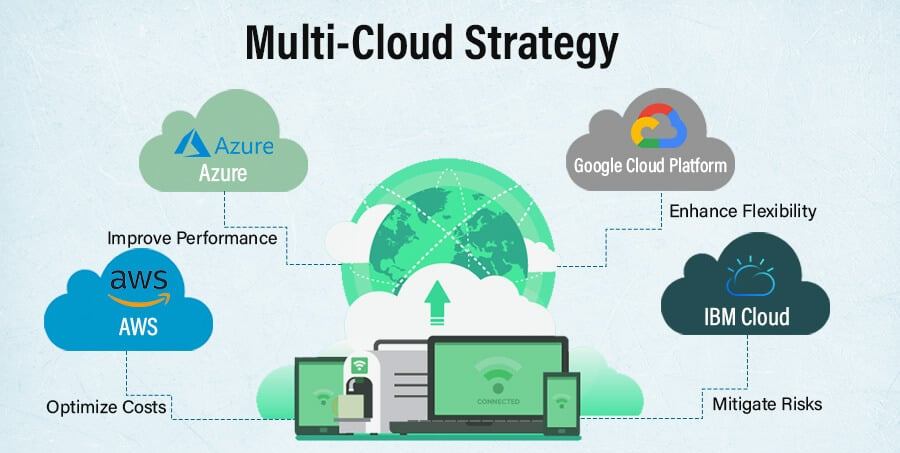
As technology evolves, the future of cloud computing appears even more promising. Trends like multi-cloud strategies, edge computing, and confidential computing are shaping the next chapter. Multi-cloud adoption allows organizations to avoid vendor lock-in by using services from multiple providers. Edge computing brings processing closer to users, reducing latency and improving performance for IoT and real-time applications. Meanwhile, confidential computing ensures that data remains encrypted even while being processed—a breakthrough for sensitive industries.
The evolution of cloud computing reflects the growing need for agility, scalability, and intelligence. From virtual machines to serverless computing, each step has brought us closer to a world where infrastructure becomes invisible and innovation takes center stage. As organizations continue to embrace digital transformation, cloud computing will remain at the heart of technological progress.