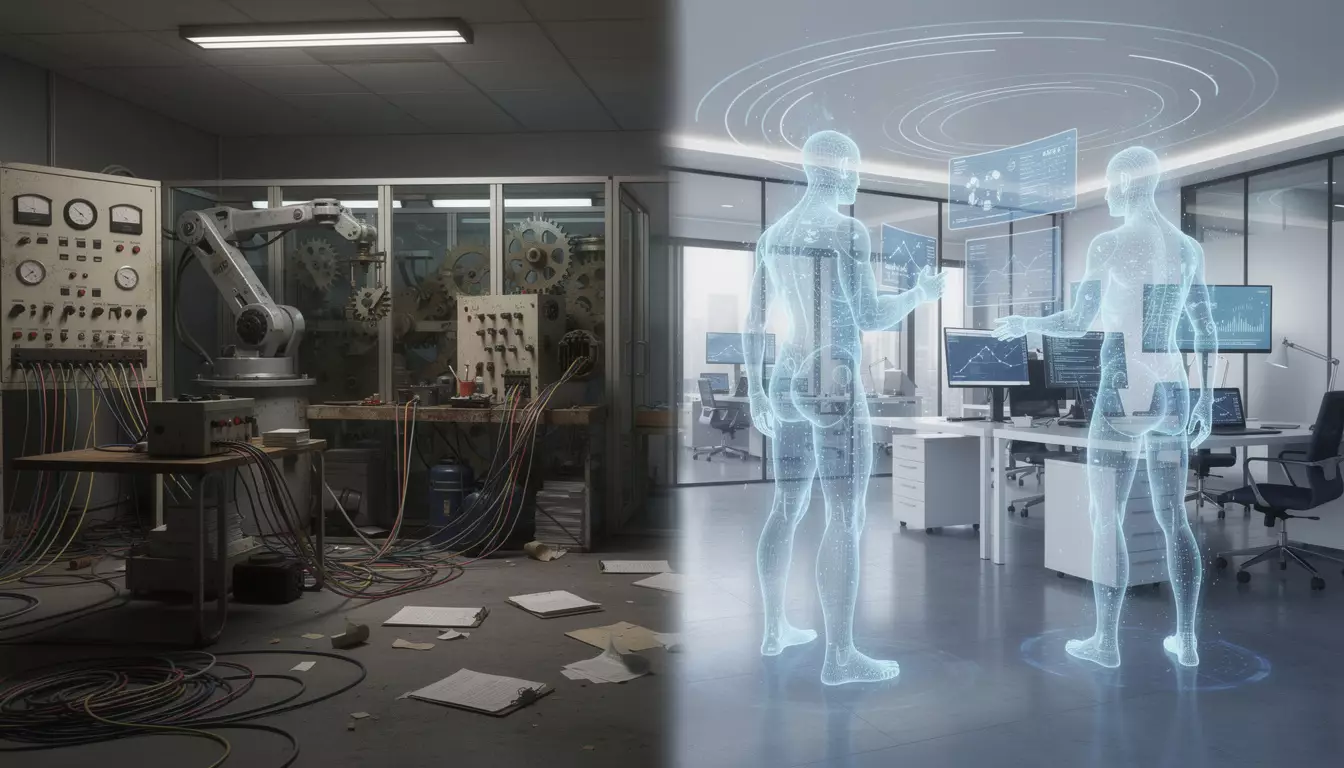
Artificial Intelligence has become one of the most disruptive forces in today’s economy, reshaping industries, transforming business operations, and redefining what it means to work in a digital world. While AI brings incredible opportunities for efficiency, innovation, and economic growth, it also raises questions about job displacement, reskilling, and the future of human labor. The relationship between AI and the workforce is complex, dynamic, and evolving—presenting challenges and opportunities that society must address with foresight and adaptability.
The conversation about AI and jobs often centers around automation. Machines have always replaced certain types of labor, but modern AI is capable of performing not just physical tasks, but cognitive ones. AI-powered systems can analyze data, draft content, respond to customer inquiries, generate code, and even make predictions or strategic recommendations. This leads many to worry that AI will eliminate a significant portion of jobs. However, history shows that major technological shifts tend to create new roles even as old ones disappear, and the AI revolution is no exception.
Rather than replacing all human work, AI is more likely to transform it. Repetitive tasks—data entry, basic reporting, routine customer service, simple scheduling—are increasingly automated. This allows workers to shift toward more strategic, creative, and interpersonal responsibilities. For example, instead of spending hours sorting through support tickets, customer service agents can handle only the most complex cases while AI chatbots manage basic queries. In healthcare, AI systems analyze scans while doctors spend more time on patient communication and treatment planning. In finance, algorithms scan thousands of transactions for anomalies, while analysts focus on interpreting insights and crafting strategies.
This transformation is creating new roles that didn’t exist a decade ago. Professions such as AI trainers, prompt engineers, model auditors, data ethicists, and automation architects are in high demand. Even traditional jobs require digital literacy and AI familiarity. Marketers rely on AI for analytics, educators use AI-driven assessment tools, and engineers leverage AI for rapid prototyping. The need for workers who can collaborate with intelligent systems continues to rise, making AI competency a core skill for the modern workforce.
Still, the shift is not without challenges. The demand for AI-related skills is growing faster than the supply. Many employees lack training in areas such as data analysis, machine learning concepts, or digital tools. This skills gap creates inequality between workers who can adapt and those who cannot. To address this, companies are increasingly investing in reskilling and upskilling programs, offering training in coding, data literacy, cybersecurity, and AI interpretation. Governments and educational institutions must also modernize curricula to prepare future generations for an AI-driven economy.
As AI takes over routine tasks, soft skills become even more valuable. Creativity, emotional intelligence, problem-solving, leadership, and critical thinking are traits that machines cannot fully replicate. Jobs involving human relationships—such as counselors, managers, educators, healthcare providers, and creative professionals—will remain essential. In fact, these roles may become more important as AI handles many analytical tasks.
Another key concern is whether AI will deepen workforce inequality. Highly skilled professionals who can work alongside AI will see rising demand and higher salaries. However, workers in repetitive or manual job categories may face displacement. Addressing this imbalance will require strong policy frameworks, accessible education, and equitable access to digital resources. Some countries are already exploring ideas such as universal basic income (UBI) and reduced working hours to adjust to an AI-augmented economy.
AI also raises important questions about ethics and transparency in the workplace. AI tools used for hiring, performance evaluation, or scheduling must be carefully designed to prevent bias or unfair treatment. Human oversight remains essential to ensure that AI systems support—not replace—human judgment in critical decision-making areas.
Despite challenges, AI offers tremendous opportunities to create a more efficient, innovative, and fulfilling workforce. When deployed responsibly, AI can reduce burnout, eliminate repetitive work, and free people to focus on meaningful tasks. Imagine a world where teachers spend more time mentoring students, doctors spend more time interacting with patients, and employees across industries use AI tools to enhance creativity and productivity. This is the true promise of an AI-powered future.
The next decade will be defined by how well society adapts to the changes brought by artificial intelligence. Technology alone will not determine the future of work—human choices will. By investing in skills, embracing lifelong learning, and designing ethical AI systems, we can build a future where AI enhances the workforce rather than replaces it.
AI is not destroying the job market—it is reshaping it. Those who adapt, learn, and collaborate with intelligent systems will thrive in the new era of work.