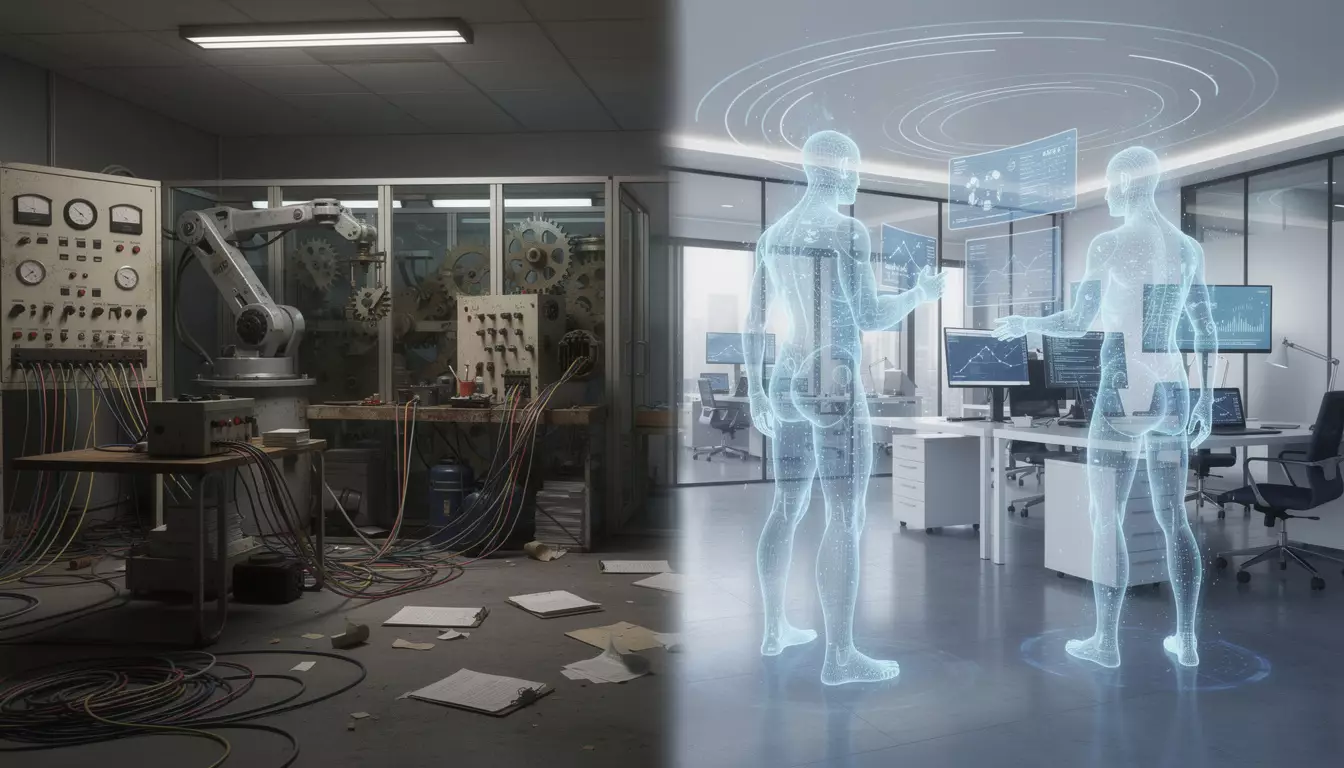
Artificial Intelligence has advanced at an unprecedented pace over the past few years, fundamentally reshaping industries, economies, and daily life. But despite these rapid developments, we are only at the beginning of AI’s long-term impact. The next decade promises breakthroughs that will redefine how humans interact with technology, how businesses operate, and how societies function. As AI systems grow more intelligent, autonomous, and interconnected, several key trends will shape the future of artificial intelligence.
One of the most significant developments will be the rise of generalized AI capabilities. Unlike today’s models, which are often specialized in specific tasks, general-purpose AI systems will be able to reason, plan, and respond across multiple domains. These multimodal models will seamlessly integrate text, voice, images, video, and sensor data, enabling richer understanding and more natural interaction. Instead of using separate tools for writing, coding, designing, or analyzing data, people will work with unified AI systems capable of handling diverse tasks with human-like intelligence.
Another major trend is the growth of AI-driven automation. Industries such as manufacturing, logistics, agriculture, and retail will increasingly rely on autonomous systems to optimize workflows. Automated warehouses, driverless delivery fleets, robotic farming machinery, and self-managing supply chains are becoming increasingly common. These advancements will boost efficiency and reduce operational costs, but also require workforce transformations. Instead of replacing humans, AI will shift job roles toward oversight, strategic decision-making, and creative problem-solving.
AI will also play a central role in cybersecurity defense. With cyberattacks becoming more automated and sophisticated, AI-powered security tools will continuously monitor networks, detect anomalies, and respond to threats before they escalate. Predictive algorithms will identify vulnerabilities before attackers can exploit them. At the same time, cybercriminals will use AI to enhance their tactics, creating a high-stakes technological arms race. Organizations will need to invest heavily in AI-driven cybersecurity to stay ahead of emerging threats.
Another transformative trend is the integration of AI into education and personalized learning. Intelligent tutoring systems will create customized learning paths for each student, adapting content based on strengths, weaknesses, and interests. Gamified lessons, real-time feedback, and AI-powered study assistants will make learning more engaging and effective. Teachers will benefit from automated grading, progress analysis, and curriculum planning, allowing them to focus more on mentorship and student well-being.
The field of healthcare will continue to benefit from powerful AI innovations. Early disease detection, real-time patient monitoring, AI-assisted surgeries, and personalized medication plans will become standard practice. Wearable devices powered by AI will track vital signs, predict health issues, and provide continuous care outside of traditional clinical settings. This shift toward proactive, data-driven healthcare will improve patient outcomes and reduce strain on medical systems.
AI is also poised to revolutionize scientific research. Advanced models will simulate complex physical systems, analyze astronomical data, predict climate patterns, and accelerate breakthroughs in materials science, biology, and physics. AI-powered laboratories—capable of autonomously conducting experiments, analyzing results, and refining hypotheses—will drastically reduce the time required to make scientific discoveries. This will lead to innovations in renewable energy, medicine, space exploration, and environmental sustainability.
As AI becomes more embedded in daily life, ethical and regulatory frameworks will become increasingly important. Governments, organizations, and researchers are already working to establish guidelines that promote safety, fairness, transparency, and accountability. Issues such as data privacy, algorithmic bias, AI misuse, and responsible deployment will continue to dominate global discussions. Building public trust in AI will require ongoing efforts to ensure systems behave reliably and ethically.
Another emerging trend is the rise of emotionally aware AI. Future systems will be able to interpret tone, facial expressions, and behavioral cues, enabling more empathetic and personalized interactions. These emotionally intelligent systems could assist in mental health support, customer service, elder care, and education. However, this capability also raises questions about privacy and emotional manipulation, making ethical design critical.
Finally, the next decade will see rapid expansion of AI-enhanced creativity. From composing music to designing architecture and generating films, AI will empower creators with tools that amplify imagination. Collaboration between humans and AI will produce entirely new art forms, storytelling techniques, and digital experiences. Creativity will become more accessible, allowing anyone to bring complex ideas to life with minimal technical barriers.
The future of AI is filled with extraordinary potential—and equally important challenges. As AI grows more capable, society must ensure it is used responsibly, fairly, and safely. The coming decade will not just be about technological progress but about shaping a world where humans and machines collaborate harmoniously.
Artificial intelligence is not simply transforming the future—it is the future. The innovations we develop today will define how humanity evolves, interacts, and thrives in the decades ahead.