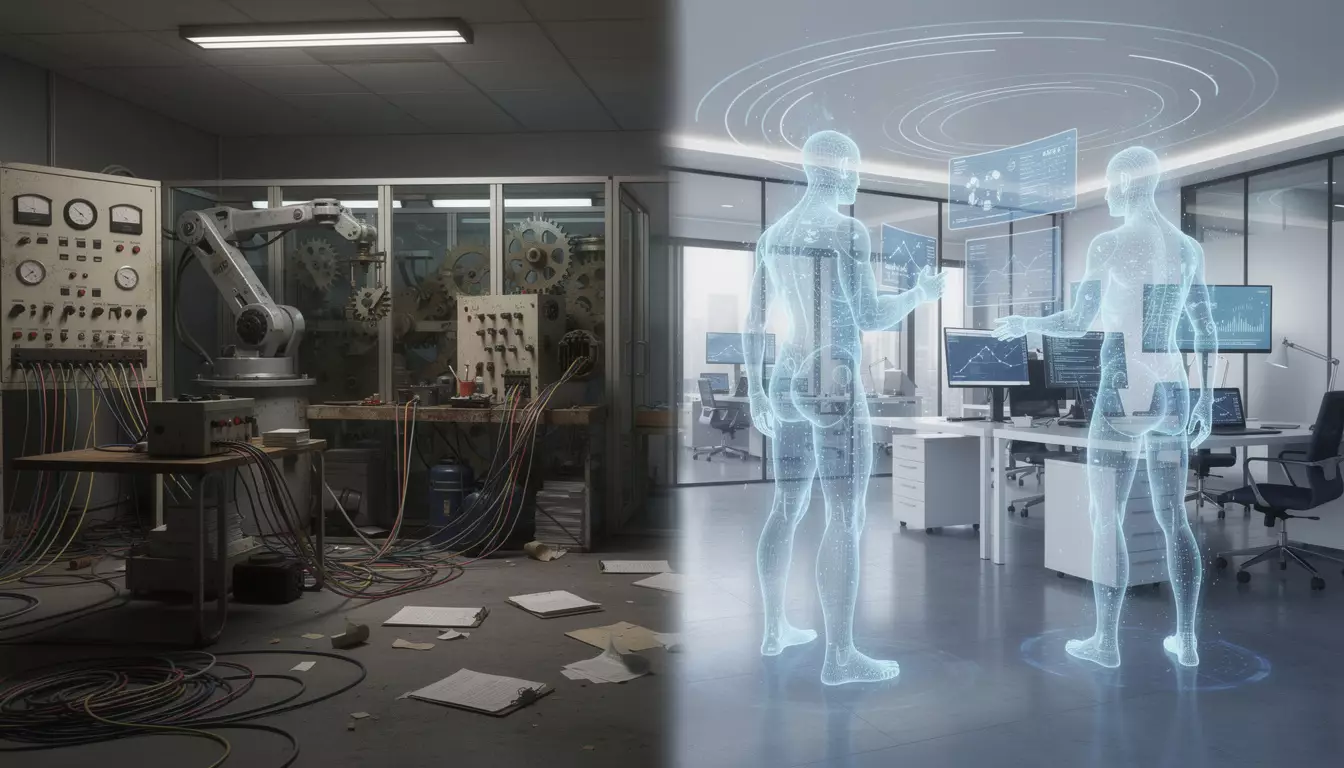
Generative AI has become one of the most influential technological breakthroughs of the decade. What began as simple text generation tools has expanded into a full ecosystem capable of producing images, videos, music, software code, scientific insights, and more. In 2025, generative AI is driving innovation across nearly every industry, reshaping how people create, communicate, and solve problems. This technology represents a new era where human imagination is amplified by machine intelligence.
Generative AI works by learning patterns from massive datasets and using that knowledge to produce new, original outputs. Early models were limited in accuracy and creativity, but today’s advanced systems generate content that is nearly indistinguishable from human work. These tools can write polished articles, generate cinematic-quality images, compose music, draft legal documents, design buildings, and analyze complex scientific data—all within seconds.
One of the most impactful uses of generative AI is in creative industries. Graphic designers use AI to create concept art, logos, and illustrations faster than ever. Filmmakers rely on AI tools for storyboarding, visual effects, and post-production editing. Musicians collaborate with AI to produce melodies, harmonize tracks, or experiment with new styles. Writers use generative AI to brainstorm ideas, refine drafts, and overcome creative blocks. Instead of replacing artists, AI acts as a collaborative partner, expanding the scope of what creators can accomplish and dramatically speeding up production workflows.
Businesses are also embracing generative AI at an unprecedented pace. In marketing, AI generates personalized ad copy, social media content, product images, and promotional videos tailored to specific audiences. Companies use AI to simulate market scenarios, analyze customer data, and forecast trends with remarkable accuracy. In customer service, AI-powered chatbots deliver natural, human-like responses that enhance user experience and reduce operational costs.
Perhaps one of the most transformative applications of generative AI is in software development. Modern AI coding assistants can write functions, debug code, automate testing, and even build full applications from written descriptions. This shift is making software creation vastly more accessible, allowing small teams and non-developers to build sophisticated digital tools. Developers spend less time on repetitive tasks and more on designing complex, innovative systems.
Generative AI is also revolutionizing scientific research. Scientists use AI to model proteins, simulate chemical reactions, analyze genetic data, and accelerate drug discovery. These systems can scan vast datasets—far beyond human capability—to uncover patterns and propose hypotheses. Breakthroughs that once took years can now happen in weeks. This acceleration is helping researchers address challenges in medicine, climate science, and renewable energy.
Despite its benefits, generative AI brings a host of ethical challenges. One major concern is the spread of misinformation and deepfakes. AI-generated images, videos, and audio can be so realistic that they blur the line between truth and fabrication. This creates risks for politics, journalism, and public trust. Governments and tech companies are working to develop detection tools, watermarking techniques, and regulations to combat AI-driven misinformation.
Another concern is copyright and ownership. Generative AI models often train on publicly available data, which may include copyrighted material. This raises complex legal questions about who owns AI-generated content and whether creators’ rights are adequately protected. Courts around the world are grappling with how to treat AI-generated works and how to ensure original creators are compensated fairly.
There are also concerns about bias in AI systems. Because these tools learn from historical data, they may unintentionally reproduce harmful stereotypes or biased patterns. Ensuring fairness and inclusivity requires rigorous dataset curation, transparent model evaluation, and continuous monitoring.
Job displacement is another issue frequently discussed. While generative AI can automate certain tasks, most industries are seeing a shift rather than a decline in human roles. AI is replacing repetitive, mechanical tasks while elevating opportunities in strategy, creativity, and oversight. Workers who adapt by learning to collaborate with AI systems will thrive in this new landscape.
Looking ahead, the potential of generative AI is enormous. We may soon see AI tools that design entire cities, create complex scientific theories, and develop personalized learning paths for every student. The next wave of innovation will focus on multimodal AI, systems that combine text, images, sound, code, and video into a single intelligent model capable of interacting naturally with the world.
Generative AI is not just a technological advancement; it is a creative revolution. By enhancing human potential and opening new doors for innovation, it is transforming the future of work, art, education, and scientific discovery. As long as society navigates the ethical challenges responsibly, generative AI will continue shaping a world where imagination and intelligence blend seamlessly.